
By Jen Barwick
Lambing ewes, olive harvests and sheep studs are a long way from the glamour and deadlines of magazine publishing in London and New York but for journalist and author Dee Nolan there’s no place like home.
Home, for Dee, is Gum Park, the same property she was born and raised on, a few kilometres from Naracoorte, in South Australia’s Limestone Coast region.
After more than 25 years living overseas, and the property being sold out of family hands, Dee says she’s come full circle to relive the two great loves of her childhood – writing and living on the land.
Dee’s grandfather bought Gum Park in 1909 and raised four sons on the then sheep property. Dee’s father, the youngest of the four continued to work the property until 1979.
“Later, when I would come home with [husband] John to visit mum and dad at Naracoorte, we’d park the car on the road outside Gum Park and I would point to various places telling him stories about growing up,” Dee said.
“The connection to here never left me; the elastic just stretched a little longer at times.
“I’d always think wouldn’t it be nice to buy it back one day. Eventually, we put the word out with a local estate agent that if, one day, the farm came up for sale to let us know.”

Dee Nolan, author, olive oil producer and official Ambassador for South Australian Premium Food and Wine.
Meanwhile in London, husband John Southgate continued his career as Vice President of Ford of Europe and Dee continued her career, moving from reporter to editor, for some of London’s major newspaper and magazines.
Then in 1996, the opportunity arose to buy Gum Park.
“We bought it. We knew we weren’t going to move back straight away but we didn’t want to miss the opportunity,” she said.
“Initially, we leased it back to the previous owners. Then a couple of years later we were able to lease most of the farm to my first cousin and her family. My cousin’s father had once farmed it in partnership with my dad so it all seemed to have this beautiful synergy.”
As Dee became a long distance property-owner, the devastation and destruction of many British farms caught the world attention as BSE (mad cow disease) spread through British cattle herds.
It sparked, Dee said, very genuine fears over the origins and production of meat and food, in general, across Britain.
“There were very real concerns in the UK and it was the start of the food movement that placed a lot of attention on things like place of origin and farming methods,” she said.
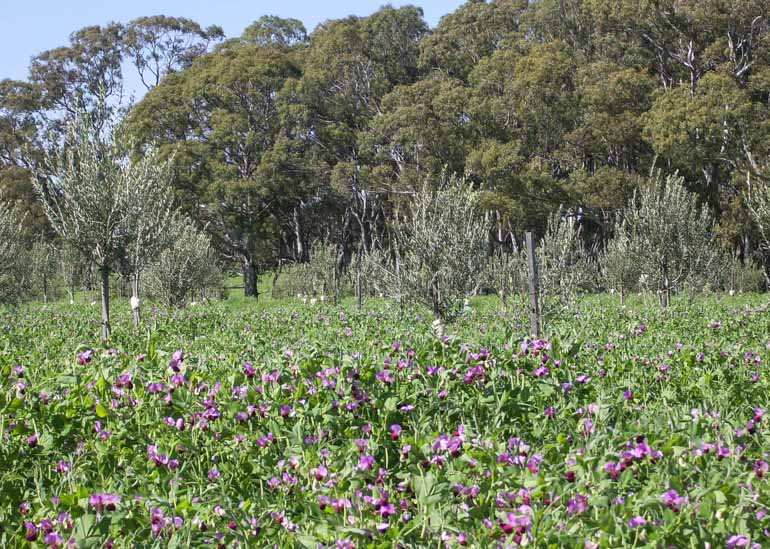
“It seemed, for me, all roads led to organic production as being the only really safe and sustainable method of food production. And, I decided I wanted the same assurances for my farm so we started the long-distance process of converting, the property to organic, which included planting an organic olive grove.”
Then, Dee was offered a dream job in New York, working for Time Inc and managing a number of new magazine projects. Life sped up but, eventually, in 2003 the couple made their way back to Australia.
Initially moving to Sydney, the couple spent several years sharing their time between the farm and Dee’s publishing career in Sydney before making Gum Park their full-time home in 2011.
They now have established a Southdown sheep stud (South Glynde), raise organic fat lambs, have an extensive vineyard, as well as the organic extra virgin olive oil which is sold under their label Nolans Road.
Dee has also used her return home to write two books, which retell her own journey along the famous centuries old network of pilgrim paths to Santiago de Compostela in Spain and tell the stories of the food, people and traditions she discovers along the way. The first, A Food Lovers Pilgrimage to Santiago De Compostela, follows the Camino, which begins in southern France and ends in the north of Spain. The second, A Food Lovers Pilgrimage to France, joins one of the major French paths.
“I loved my childhood on the farm, but I never seriously considered farming was in my future. It really wasn’t an option for a girl at the time,” she said.
“I think perhaps there’s a little residual farming instinct that’s kicked in but, mostly, I think the skills I’ve learnt as a journalist are proving to be the most useful.
“Not being afraid to ask questions and being able to track down the right people to ask those questions of, has definitely helped.”
Life now is a long way from a life of the deadline-driven and diary-dictated editor in New York and London.
“I think mostly it’s the unpredictability of the day, which has been the greatest change to get used to. Combine weather, machinery and animals into your day and you need a small miracle to take place to even tick off one or two things on a list you started the morning with,” she said.
“I’ve had to learn to surrender to the flow and unpredictability of life on the land but there’s also a quality of life and sort of psychological strength you get in return… it all works itself out eventually. I wouldn’t change a thing.”