
They’ve been providing healthcare in SA for more than 120 years – now, the Royal District Nursing Service is leading a new era in the state’s health industry.
From a virtual hospital to doctors “holoporting” into your home, the not-for-profit is adopting an innovative approach – in line with SA’s rapidly transforming health industry – to take their proud history of domiciliary care into the future.
RDNS SA, part of the national Silver Chain Group, were selected to as the provider of Domiciliary Care Services in South Australia in October last year.
CEO of RDNS SA and Silver Chain, Dr Christopher McGowan, has over 25 years of experience in the health industry including as Director of Primary Health Care for the SA Government.
He says becoming the new provider allows RDNS to build on their long history in the state.
“We recognise how important it is for people to remain living independently at home, connected to their neighbourhoods and communities, and the range of services we already provide in South Australia help people to do just that.
“We are committed to investing in South Australia through technology, innovation and job creation as we expand our services in pursuit of our vision to provide world’s best health and aged care in the home, so Australians can confidently live their lives as they choose.”
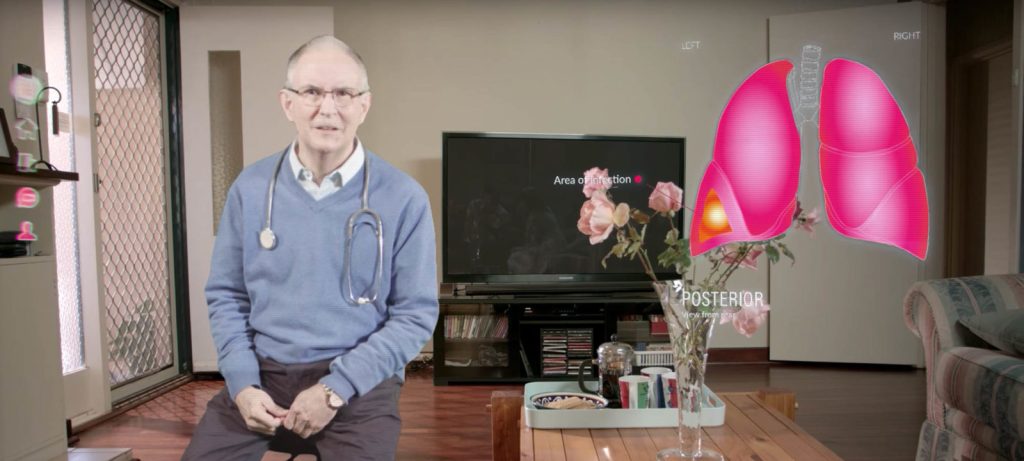
Focusing on new technology to aid in-home patients, the group recently unveiled a “holographic doctor”, a world first.
Designed with Microsoft, the service, known as Enhanced Medical Mixed Reality (EMMR) uses Microsoft’s HoloLens – the first holographic computer – to allow users to interact with holograms in the world around them.
The head set technology will allow patients and nurses to interact in real time with doctors, who appear as holograms in their homes.
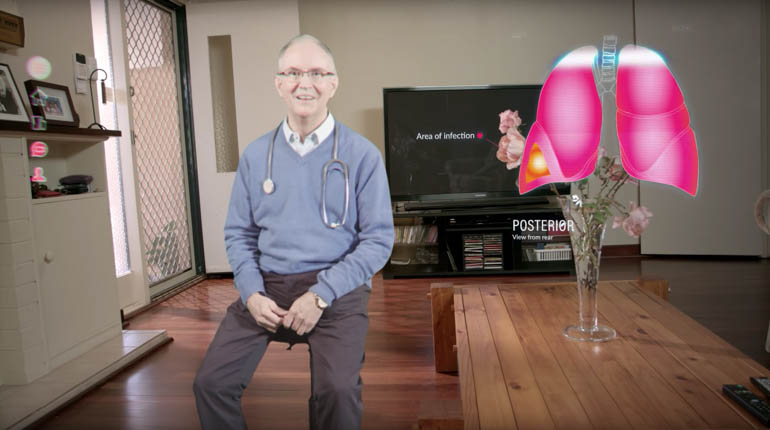
The doctor will “see” you now
Christopher says EMMR will enable a new and seamless level of world’s best interactive health and aged care, further supporting people to stay at home, rather than be transferred to a hospital.
“They can have their consultations in the home,” he said.
“They won’t have to travel for appointments, and clinical specialists can remain in central locations while still providing personalised care and saving the healthcare system time and money.
“Our research shows around 30% of people don’t need to be in hospital and could be receiving the same safe, quality treatment at home where they feel more comfortable with the added benefit of freeing hospital beds for critically unwell patients.”
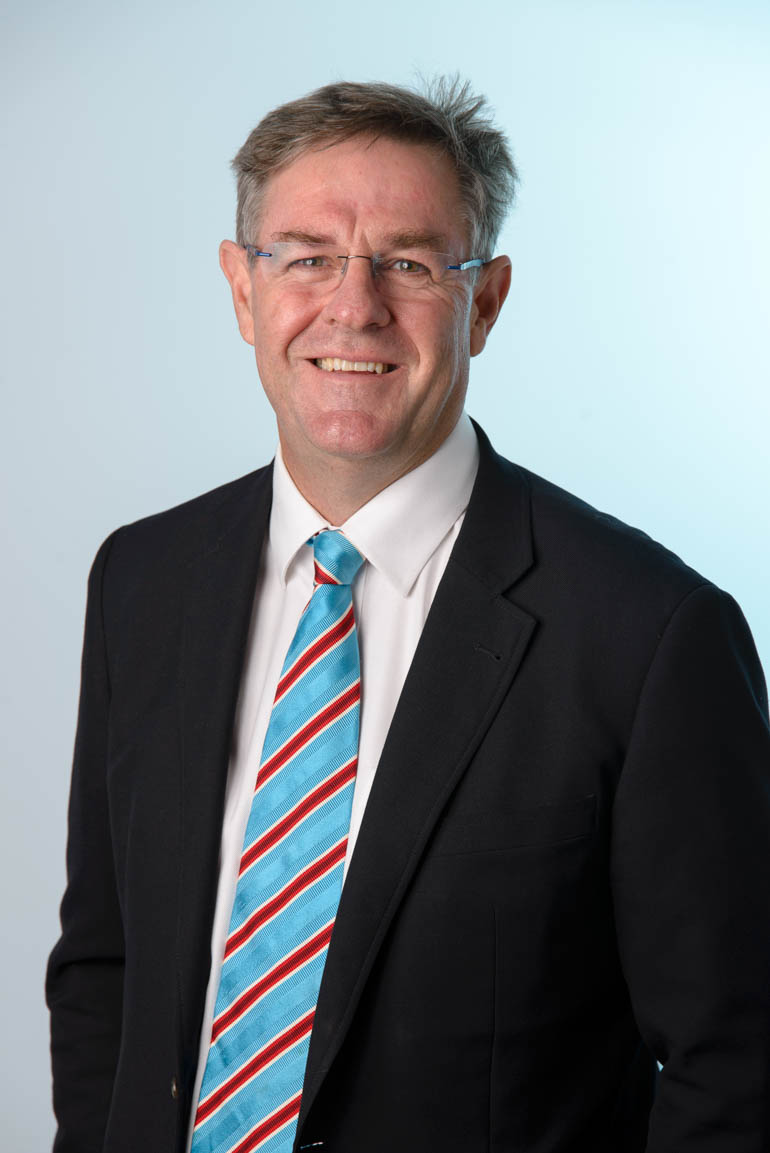
Chief Executive Officer of RDNS (SA) and Silver Chain, Dr Christopher McGowan
Using EMMR, a nurse uses the Microsoft HoloLens to gain hands free access to clinical data through a holographic dashboard, while a doctor will effectively “see” through the eyes of the nurse in real time as the consultation takes place.
EMMR is leading a rapidly changing technological landscape within healthcare, giving South Australians greater at home options for care.

The holographic dashboard
“EMMR raises the prospect not of ‘will’ technology change our healthcare system, but more ‘when’ and ‘how’ it will revolutionise delivery of care in Australia,” Christopher said.
The technology is in the final stages of software development and will be trialled in the coming months in a variety of settings before being rolled out.
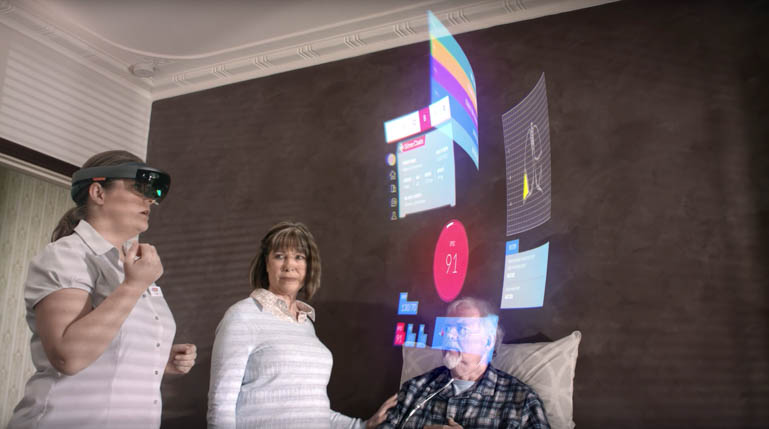
Nurses can access and interact with patient and medical data via holograph
It’s the latest addition to RDNS’ Virtual Hospital which currently offers services in the Adelaide area via video phone technology.
The video phone is set up in people’s home and links directly over broadband Internet to the contact centre, which is staffed by qualified nurses, and provides support for both patients and carers, who know help is at hand from 7am until 11pm every day.
The service is in line with the move towards independent health management adopted by the National Disability Insurance Scheme (NDIS).
As a registered NDIS provider, RDNS is one of many organisations gearing up for the major social reform.
The biggest social reform since Medicare in the 1970s, the $22 million NDIS is expected to support 460,000 Australians with a disability by giving them more control over how their support funding is spent.
The insurance scheme is for people with a disability aged under 65 and is expected to double the disability sector’s workforce by 2019, and benefit more than 32,000 South Australians once fully implemented from July, 2018.
Visit I Choose SA for Industry to learn more stories about key industry leaders, why they’ve chosen SA as a base and how the state is enabling them to succeed.
