
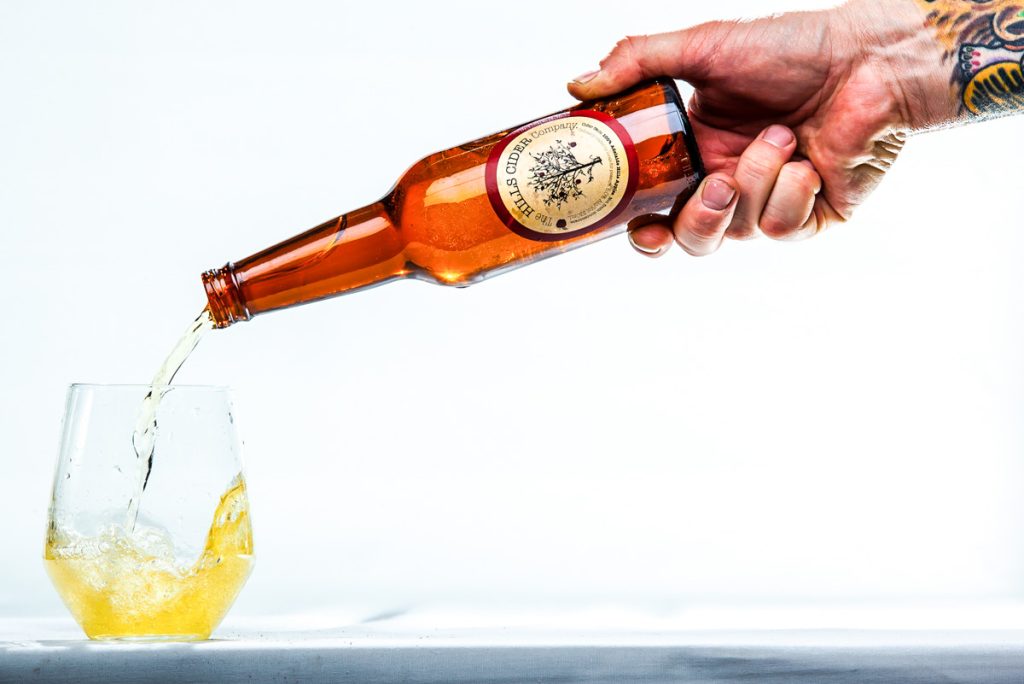
It doesn’t take long, when talking to The Hills Cider Company co-proprietor and cider-maker Steve Dorman, to realise he’s not strayed too far from his first career in winemaking.
As Steve talks, terms such as barrel-aged, wild ferments, flavour profiles, quality fruit, and food matching drop into the conversation with ease. If you were only half-listening you could be forgiven for thinking Steve was reminiscing about his university days, studying winemaking in Adelaide.
But Steve has no time, nor need, to reminisce as he’s employing those winemaking skills every week taking his and business partner Tobias Kline’s The Hills Cider Company into its sixth year, and a burgeoning craft cider category in Australia and overseas.
“This way I get to do a vintage every week, instead of every year,” Steve said.
The company’s “bread and butter” is its three staples: Apple, Pear and Apple Ginger, selling in packs and kegs. But, Steve readily admits there’s always a number of ‘small batch’ experiments underway.

Steve Dorman, cider-maker and co-proprietor at The Hills Cider Company Company
Until now, Steve had sat reclined and casual at the boardroom table, but talk of limited releases and barrel ageing has him sitting up and leaning forward, enthusiasm pouring forth as he talks about the various small batch ciders he’s carefully watching, tasting and tending too back at the cidery.
“We’re doing more and more limited releases. I’m always working with cider and aged oak, wild ferments, fermenting out on lees… in doing this we’re able to get some awesome ciders with some pretty funky mouthfeels, flavours and aromatics,” he said.
“All our limited releases are pre-sold before they even get onto the market. It’s predominantly the on-premise in Adelaide, Melbourne and Sydney that are going crazy for it.
“The craft cider category is where the wine industry was 20 years ago. We’ve now got people seeking out diversity, there’s a growing focus on regionality, on variety, on the stories behind the brand and their traceability.”
Since releasing its first product on Australia Day 2010, Steve says they’ve watched with pleasure Australia’s cider market grow in depth and diversity.
“Ciders ability to food match definitely helps… our apple cider is a great alternative to degustation style dinners or champagne breakfasts. The pear’s brilliant for having with cheese platters, after dinner and being lower in alcohol means you can have two glasses instead of one with dinner,” he said.
“We also have a lot of restaurants using our cider in their glazes, jus and gravies. Honestly, replace that cup of water with a cup of the cider, it will do amazing things to your gravy.”
The Hills Cider Company indirectly employs 65 people and has encouraged several Adelaide Hills’ growers to return to dormant orchards they’d previously walked away from.
“Within the next 12 months, we will purchase around 10-15% of the apple and pears being grown in the Hills, and there’s room for us to take five times that should and when we need to,” Steve said.

The Hills Cider Company purchases around 10-15% of the apple and pears being grown in the Hills
The Hills Cider Company’s “new world” craft ciders are available in the traditional home of cider, the United Kingdom, as well as Papua New Guinea, Hong Kong, New Zealand and Singapore.
“We’re receiving new requests for export every week… and by the end of the year we hope to also be exporting to United States, Japan and China as well as pushing harder into the UK.”