By Alannah James
Adelaide Hills journalist Prue Adams has told thousands of stories in her long career, but none have impacted more than her report on the debilitating disease, Q-Fever.
Prue’s report, ‘The Quiet Fever’ aired on ABC’s Landline in 2015, and was a long form exploration of the somewhat unspoken disease Q-Fever and its crippling affect on sufferers.
In mid-July, Prue was thrilled to attend the International Federation of Agricultural Journalists (IFAJ) in Bonn, Germany, where she was awarded the Star Prize for Broadcast Video for ‘The Quiet Fever’.
Q-Fever is an infection caused by a bacterium called Coxiella burnetti which is related to direct or indirect contact with animals such as cattle sheep or goats.
“Q-Fever is not just an Australia issue,” Prue explains.
“It’s thought to be in every country of the world,” she adds.

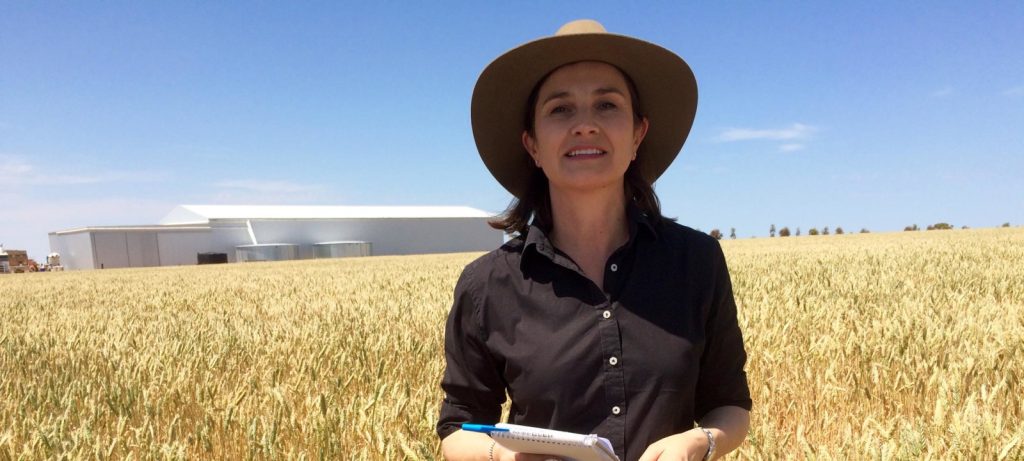
Prue Adams’ ‘The Quiet Fever’ report aired on ABC’s Landline last year, exploring the unspoken Q-Fever disease
Living in the Adelaide Hills with her husband and two children, Prue admits has always been passionate about telling longer form stories.
She completed her journalism degree at the University of South Australia before taking up her first job in Mount Gambier at SES-8.
After a longer than planned backpacking trip, Prue accepted a journalism role with Channel 7 before landing her first job with the ABC – 27 years ago.
She was later asked to join the Landline program in 1996 and began working on longer format stories.
“I quite enjoyed news but I also enjoyed the creativity of longer form journalism,” Prue says.
“You can really get stuck into the issues and take time with the camera work.”

Prue was asked to join the Landline program in 1996 and began working on longer format stories
Prue says it’s hard to pinpoint when the Q-Fever story first popped onto her journalism radar.
“It was about eleven years ago when I first read something about Q-Fever and how Australia is the only country that has a vaccine for it,” Prue says.
“In the 1980s there was a fever outbreak at an Adelaide Hills abattoir which prompted Professor Barry Marmion, an Adelaide doctor, to develop a vaccine.”
“Professor Marmion was finding that there were people suffering long term fever-like symptoms from being in contact with animals.”
Prue conducted some interviews with Professor Marmion and Q-Fever sufferers before setting them aside for many years.
“I don’t always keep the files and tapes but I did for this story, because I felt like they would become something of value down the track,” Prue explains.
It was not until July 2014 after writing Professor Marmion’s obituary for ABC online that Prue was contacted by Sydney woman Christine Hunter.
Christine’s daughter, Alison, got sick when she was 10 years old and lived with chronic fatigue, aches and pains and seizures until she died at age 19 in 1996.

IFAJ recently awarded Prue the Star Prize for Broadcast Video in Germany
In the hope of finding out what caused Alison’s death, the family arranged for body tissues to be taken and stored for future research.
“This poor young bright girl was unable to go to school and her teenage years were ruined,” Prue says.
“Many years later, Alison’s body tissues were tested for Q-Fever and came back riddled with it,” Prue adds.
“When Christine told me all this over the phone, I realised the Q-Fever issue had legs and the more people I spoke to, the more I realised how big of an issue it was.”
While Prue admits receiving the IFAJ Award was a huge honour, she says the ongoing positive ripple effects of her story being aired has been the best part.
“Big organisations like Rabobank have instituted vaccination policy for people who work in rural properties and doctors who go out to work in rural areas are being trained on how to look for Q-fever symptoms,” Prue says.
“It’s very important to get an early diagnosis with Q-Fever,” Prue explains.
“Unfortunately many of the symptoms get passed off as other things.”
A Facebook group was also set up in the wake of the story being aired on ABC for sufferers to share their experiences with each other.
“I still feel like I have only scratched the surface on this issue and I hope that other countries start to look into it because I think they will find a lot of people who have Q-Fever.”
Like this story? Nominate a story from your region.
Click here to nominate >>
These inspiring regional stories made possible by: